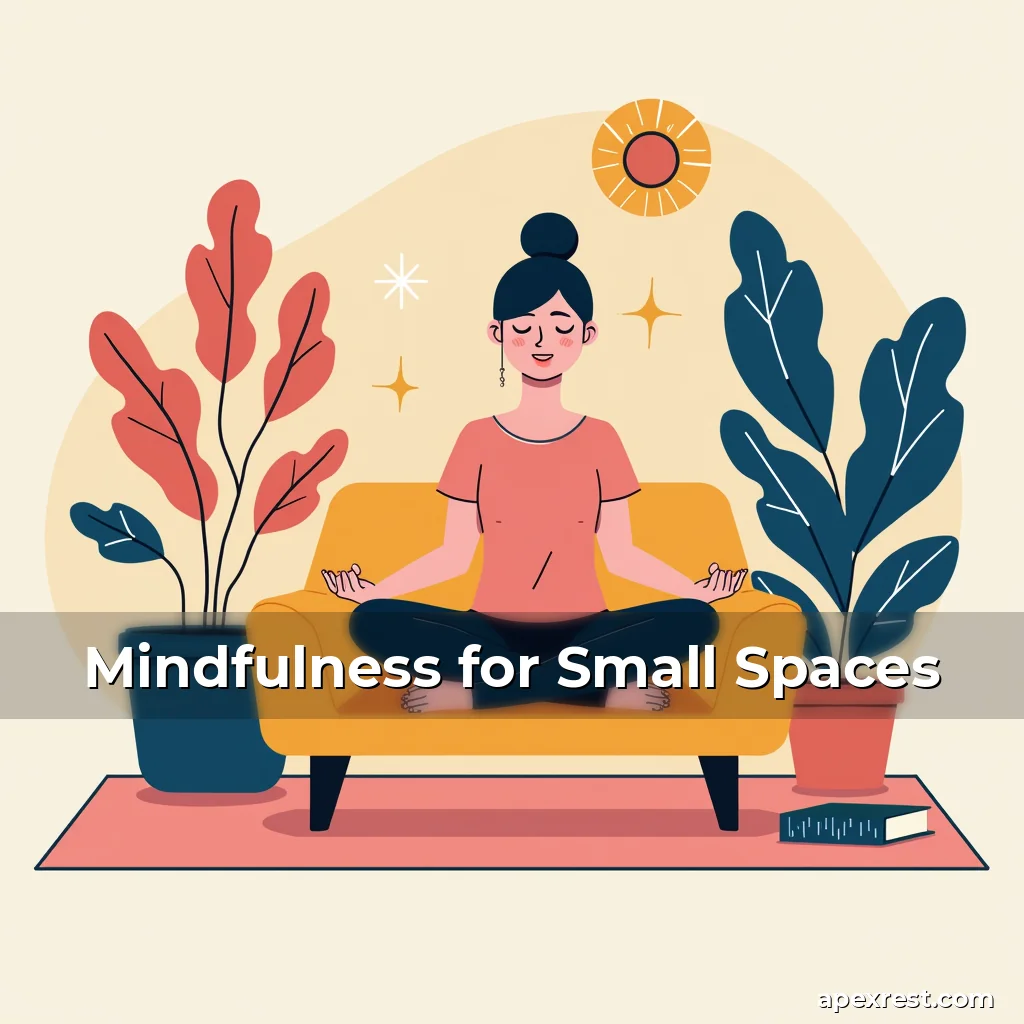
Mindfulness for Small Spaces
In an age where mental clutter often matches physical overcrowding, mindfulness offers a sanctuary within our smallest environments. This practice invites us to find calm amidst chaos by focusing on the present moment.
The concept of mindfulness is particularly relevant today as modern life increasingly demands constant attention across digital platforms and social obligations. It provides a way to reclaim personal space through intentional awareness.
Understanding Mindfulness in Contemporary Contexts
Mindfulness has evolved from ancient meditation practices to become a widely recognized tool for stress reduction. Its accessibility makes it especially suited for individuals navigating cramped living conditions or fast-paced lifestyles.
At its core, mindfulness involves paying deliberate attention to experiences without judgment. This can be practiced anywhere—whether standing in a crowded subway or sitting at a small kitchen table.
The benefits extend beyond individual well-being; they influence how we interact with our surroundings. When applied consistently, mindful habits transform limited spaces into zones of peace and productivity.
Research indicates that regular mindfulness practice enhances emotional regulation skills. These improvements are crucial when dealing with spatial constraints that may trigger frustration or anxiety.
- Cognitive clarity: Practitioners report improved concentration after even brief daily sessions.
- Emotional resilience: Regular practice helps manage reactions to stressful situations effectively.
- Spatial perception: Awareness training alters how people experience their immediate environment positively.
The Science Behind Mindful Living
Neuroscientific studies have revealed measurable changes in brain structure associated with consistent mindfulness practice. These adaptations support better decision-making under pressure.
Functional MRI scans show increased grey matter density in regions linked to learning, memory, and emotion regulation. Such findings validate the tangible impact of mindful techniques.
Notably, these neural changes occur regardless of the setting—be it a quiet room or a bustling city street. The adaptability of mindfulness makes it universally applicable.
Empirical Evidence Supporting Practice
A landmark study published in JAMA Psychiatry found that participants practicing mindfulness experienced reduced symptoms of depression and anxiety over time. This research involved diverse populations across various settings.
Data analysis showed significant improvement rates among those who maintained regular practice routines compared to control groups. The results underscored the effectiveness of structured approaches.
Moreover, follow-up assessments indicated sustained benefits lasting several months post-intervention. This longevity reinforces the value of integrating mindfulness into daily life.
The methodology included both qualitative feedback and quantitative metrics, providing robust evidence of long-term psychological advantages.
Creating Mindful Moments in Limited Environments
Even confined spaces offer opportunities for cultivating presence through simple exercises. A few minutes dedicated each day can create noticeable shifts in perspective.
Focusing on sensory experiences—like feeling air movement against skin or listening closely to ambient sounds—can anchor one’s consciousness firmly in the current moment.
Intentional breathing patterns serve as effective anchors during moments of overwhelm. This technique requires minimal space yet yields substantial mental relief.
Engaging fully with routine activities transforms mundane tasks into meditative rituals. Washing dishes becomes a chance for focused attention rather than mindless repetition.
- Breath awareness: Counting breath cycles while seated quietly promotes centeredness.
- Body scan: Progressively noticing sensations from head to toe releases tension stored physically.
- Grounding techniques: Naming five things seen, four felt, three heard, two smelled, and one tasted reorients scattered thoughts.
These methods require no special equipment or location but demand commitment to consistency and self-awareness.
Designing Your Personal Mindfulness Space
Selecting an area conducive to reflection doesn’t necessarily mean acquiring new furniture. Repurposing existing elements can yield surprising results.
Soft lighting, natural textures, and calming colors contribute significantly to creating a serene atmosphere. Even a corner shelf arranged thoughtfully achieves this effect.
Personalizing the space with meaningful objects fosters connection between practitioner and environment. Artwork, plants, or symbolic items enhance the overall ambiance.
Organizing items by frequency of use reduces visual clutter, allowing clearer mental focus during practice sessions. Decluttering supports both physical and cognitive organization.
Consider incorporating elements that engage multiple senses simultaneously—for example, combining scented candles with tactile materials like woolen blankets.
Navigating Challenges in Urban Settings
City dwellers face unique obstacles due to noise pollution, high population densities, and limited private areas. Yet mindfulness remains highly adaptable despite these challenges.
Urban practitioners develop creative strategies such as scheduled silence periods or designated quiet hours to counteract environmental stimuli overload.
Prioritizing quality over quantity proves essential when selecting times for practice amid competing responsibilities. Shorter, more frequent sessions maintain momentum better than infrequent extended ones.
Communities formed around shared interests provide mutual encouragement and accountability. Group meetings help sustain motivation levels through collective effort.
Public transportation commutes present unexpected opportunities for practice. Using travel time for deep breathing or body scanning turns otherwise wasted moments into productive intervals.
- Noise management: White noise machines or earplugs assist in filtering out disruptive auditory inputs.
- Time blocking: Allocating specific windows for mindfulness prevents schedule conflicts.
- Community building: Local meetups foster supportive networks that reinforce positive habits.
Adapting traditional practices to fit urban realities ensures continued engagement with mindfulness principles effectively.
Cultivating Gratitude Through Spatial Awareness
Observing one’s immediate surroundings with curiosity generates appreciation for what already exists. This shift in mindset combats feelings of scarcity or insufficiency.
Simple acts like noticing sunlight streaming through a window or hearing birdsong outside build gratitude incrementally. Over time, these micro-moments accumulate into profound awareness.
Keeping a journal to record daily observations strengthens the habit of conscious looking. Writing down sensory impressions creates lasting documentation of mindful experiences.
This practice encourages deeper connections with place and purpose. Recognizing beauty in familiar settings nurtures contentment regardless of external circumstances.
Overcoming Common Obstacles to Consistent Practice
Lack of time emerges frequently as a barrier preventing regular engagement with mindfulness techniques. However, micro-practices integrated into daily routines overcome this challenge efficiently.
Setting realistic expectations about progress prevents discouragement. Improvement occurs gradually rather than suddenly, requiring patience and perseverance.
Distracted minds naturally resist focused attention initially. Gentle redirection rather than forceful correction maintains motivation without triggering resistance.
Varying practice formats keeps the process dynamic and engaging. Alternating between guided sessions and independent exploration sustains interest over longer periods.
- Micro-meditations: Brief pauses throughout the day refresh mental state quickly.
- Progress tracking: Logging session durations builds confidence in gradual advancement.
- Practice variety: Experimentation with different styles prevents stagnation and boredom.
Addressing these common hurdles proactively enables smoother integration of mindfulness into everyday existence.
Expanding Benefits Beyond Individual Well-Being
Regular mindfulness practice influences interpersonal relationships profoundly. Enhanced empathy and active listening skills result from cultivated attentiveness.
Improved communication flows from being fully present during conversations. People feel genuinely heard, which strengthens trust and rapport.
Conflict resolution becomes less confrontational when approached with nonjudgmental openness. Understanding perspectives without immediate reaction diffuses tensions constructively.
These relational benefits ripple outward, affecting work dynamics, family interactions, and broader community engagements positively.
Conclusion
Mindfulness empowers individuals to cultivate inner tranquility regardless of outer circumstances. By focusing on available resources instead of perceived limitations, anyone can begin this journey toward greater awareness.
Implementing small yet consistent practices transforms ordinary days into extraordinary experiences filled with intentionality and presence. Embracing mindfulness opens pathways to enriched living right here, right now.

news is a contributor at ApexRest. We are committed to providing well-researched, accurate, and valuable content to our readers.